Home › Commercial Concrete Slabs and Flatwork
Get flat, durable commercial concrete slabs in Clinton Township, MI for warehouses, loading docks, and equipment pads. We use proper subgrade prep, reinforcement, and finishing techniques to control cracking and wear. Our team delivers high quality commercial flatwork on schedule.
Superior Concrete Clinton Township provides professional commercial concrete slab throughout Clinton Township, MI, Michigan and the surrounding area. Our licensed, insured crew delivers safe, clean, on-time work with a free estimate before anything begins. Call (586) 300 - 3784 or request your free quote.
Commercial Concrete Slabs & Flatwork for Clinton Township Businesses
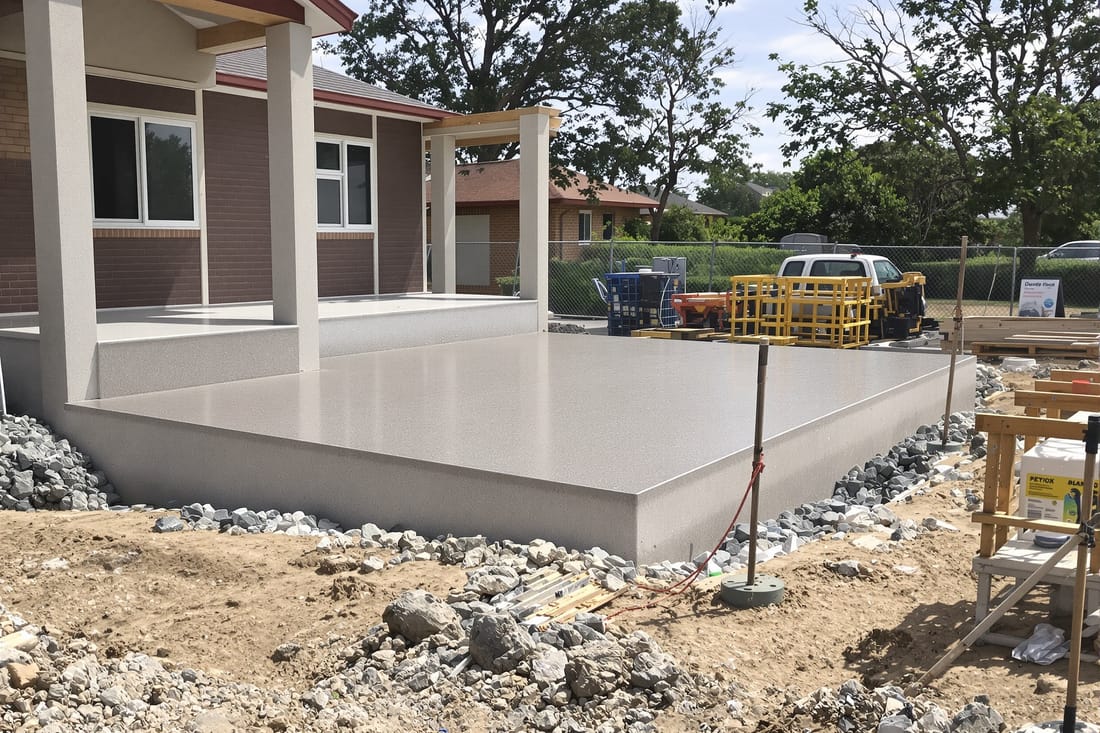
Superior Concrete Clinton Township builds commercial concrete slabs and flatwork that are designed around how your business actually uses the space, not just what looks good on paper. Whether you need a new warehouse floor, a restaurant patio, equipment pads, or sidewalks that meet ADA standards, we match slab design and finish to the real loads and traffic your property sees.
In Clinton Township and the surrounding Macomb County area, we work in a freeze‑thaw climate with clay-heavy soils and lake effect moisture. Those conditions are tough on commercial concrete. Our slab designs account for those local factors with proper base prep, drainage planning, and reinforcement choices so your concrete holds up to Michigan winters, de-icing salts, and heavy vehicle traffic.
We handle new construction, tenant build‑outs, and tear‑out and replacement of failed slabs. For property managers and business owners, that means one contractor from layout and engineering, to forming and pouring, to saw cutting and joint sealing, so you are not chasing multiple trades to get a single floor completed.
How We Design a Durable Commercial Concrete Slab
A good commercial concrete slab in Clinton Township starts with the right design. We look at what will go on the slab: pallet racking, forklifts, delivery trucks, kitchen equipment, or outdoor seating. That information determines slab thickness, reinforcement layout, concrete mix strength, and joint spacing.
For light-duty commercial floors like retail spaces or offices that support only foot traffic and light partitions, 4 inch slabs with fiber reinforcement may be appropriate. For loading docks, auto shops, and warehouse aisles that carry forklifts or loaded box trucks, 6 to 8 inch slabs with rebar or welded wire mesh and higher-strength concrete are typical. For heavy industrial or dumpster pads, we may increase thickness further or add localized thickened sections under wheel paths.
Joint planning is critical. In our climate, uncontrolled cracking is a constant risk. We lay out control joints based on slab thickness (commonly spacing at 10 to 12 feet for 4 to 6 inch slabs) and coordinate them with your racking, doorway locations, and equipment pads so joints do not fall in inconvenient places. We also specify isolation joints around columns, pits, and equipment bases to let the slab move without stressing critical structures.
We use mixes that balance strength with workability and durability. For exterior slabs, we typically recommend air‑entrained concrete that handles freeze‑thaw cycles and de‑icing chemicals better. For interior floors, the mix might be adjusted to support power trowel finishing for a hard, smooth surface that resists wear and is easier to coat or seal later.
Site Preparation, Base Work, and Drainage in Local Conditions
Most commercial slab problems in Clinton Township start below the concrete, not in it. Our crews put a lot of focus on subgrade and base preparation, because we see plenty of failures caused by thin or uneven stone bases, organic material left in place, or poor drainage.
We begin by stripping topsoil, organic material, and any soft or unsuitable soils where the slab will sit. In many Clinton Township locations the native soil is a clay mix that holds water. Where needed, we compact and proof-roll the subgrade and may add stabilization measures in soft spots so the slab does not settle unevenly later.
Next, we install a compacted aggregate base, usually 4 to 8 inches of crushed concrete or limestone, depending on the type of loading. This layer is laser graded to a uniform slope and density checked where required. Proper base thickness is especially important for areas like drive lanes, dumpster pads, and service alleys that see repeated truck traffic.
Drainage is built into the plan. For interior slabs, we incorporate slope to trench drains or floor drains where needed, for example in auto bays, wash areas, and commercial kitchens. For exterior flatwork like loading areas and walkways, we slope surfaces away from buildings and coordinate with existing site drainage so water does not pond against foundations or freeze across customer walk paths in winter.
Forming, Reinforcement, and Pouring Process
Once the base is ready, our team sets precision forms that define slab edges, elevations, and slopes. On commercial projects, we typically use laser levels or total stations to maintain tight tolerances so finished floors meet door thresholds, dock heights, and equipment anchor elevations without surprises.
Reinforcement is then installed according to the slab design. For light commercial uses we might use welded wire mesh combined with synthetic fibers in the mix. For heavier-duty slabs, we often install #4 or #5 rebar on a grid pattern, commonly 12 or 18 inches on center, supported on chairs so the steel stays in the correct position within the slab during the pour. In some cases we incorporate dowels where slabs meet existing concrete to help control differential movement.
During the pour, we manage concrete delivery timing to keep a consistent mix and slump from the first truck to the last. Our crews place the concrete, strike it off using screeds or laser screeds for larger floors, then bull float to level the surface and bring up paste for finishing. For larger interior slabs, we plan pour breaks and construction joints so the work can be completed efficiently without cold joints where they do not belong.
Timing is crucial. In warm Michigan summers, concrete can set quickly. We monitor air temperature, substrate temperature, and weather forecasts, and we may adjust mix design or use set‑control admixtures so finishing can be completed properly without surface defects.
Finishing Options: From Warehouse Floors to Public Walkways
Commercial concrete flatwork does not all get the same finish. Superior Concrete Clinton Township matches the finish to the use, safety requirements, and maintenance expectations of each area.
For warehouses and industrial buildings, we typically provide hard‑troweled or machine‑troweled finishes that create a dense surface, ideal for forklift traffic and pallet jacks. These floors can later receive epoxy, urethane, or other coatings, and a good trowel finish is critical for coating adhesion and appearance. Where higher abrasion resistance is needed, we can incorporate surface hardeners during the finishing process.
For exterior sidewalks, plazas, and entry areas, we usually recommend a broom finish, which provides slip resistance in rain and during winter freeze‑thaw cycles. The broom texture can be light or heavy depending on the use. For public entrances we often combine a broom main surface with a decorative border, such as a picture‑framed smooth or lightly textured edge.
If you want a more architectural look for patios or branded spaces, we can offer decorative flatwork options like colored concrete, exposed aggregate, or saw‑cut decorative joint patterns. These can be used on restaurant patios, office building courtyards, or retail storefronts while still meeting commercial load and durability requirements. For loading docks and ramps, we design finishes that balance traction for vehicles with ease of snow removal for your maintenance crews.
Cost Factors and Common Problems We Help Clinton Township Clients Avoid
Commercial concrete slab pricing in Clinton Township is driven by multiple factors, and understanding them helps you budget realistically. The biggest cost drivers are slab thickness, reinforcement type, and complexity of the layout. A straightforward 4 inch interior slab with minimal reinforcement will cost far less per square foot than a heavily reinforced 8 inch slab with complex slopes and drains.
Access to the site also matters. If trucks can back directly to the pour area, we minimize pump time and labor. Tight sites, limited hours, or work inside active businesses may require concrete pumping, off‑hours schedules, or multiple smaller pours, all of which affect price. Removal of existing failed concrete and subgrade repairs are additional line items many owners underestimate.
The most common problems we see in existing commercial slabs are uncontrolled cracking, settlement, surface scaling from de‑icing salts, and spalling at joints and doorways. Many of these issues come from poor subgrade prep, wrong joint spacing, incorrect mix for our climate, or finishing errors like adding water to the surface. Our process is built to avoid these mistakes. We plan joint layouts carefully, specify appropriate air‑entrained mixes for exteriors, ensure proper curing, and avoid practices that weaken the top layer of the slab.
For owners and property managers, it is worth asking any contractor how they handle compaction testing, joint layout drawings, and curing. Inferior curing alone can shorten a slab’s life by years. We typically use curing compounds or wet curing methods and coordinate protection of the slab from early traffic so the surface can develop full strength and durability.
Project Management, Scheduling, and What to Expect
Commercial projects in Clinton Township often operate on tight timelines, especially when tied to tenant move‑in dates or seasonal openings. Superior Concrete Clinton Township coordinates with your general contractor, architect, or directly with ownership to integrate our work into the broader schedule.
Before work starts, we review plans, verify elevations, and walk the site with you to clarify edges, door thresholds, and any load‑critical areas like equipment pads or rack legs. We outline pour sequences to keep access open where you need it and minimize disruption to existing businesses on multi‑tenant properties.
During the project, you can expect clear communication about pour dates, traffic restrictions, and curing times. Many interior slabs can be walked on within 24 to 48 hours, but heavy equipment traffic is usually delayed for several days to allow sufficient strength gain. For exterior flatwork exposed to de‑icing chemicals, we discuss realistic timelines before the first winter and what maintenance, such as sealing, will help maximize service life.
Once the slab or flatwork is complete, we perform a walk‑through, identify any areas requiring touch‑ups, and provide guidance on long‑term care. That may include recommended joint sealing schedules, cleaning practices for high‑traffic floors, and what to avoid, such as certain aggressive de‑icers or early heavy loading. Our goal is that your commercial concrete slab continues to perform for your business long after the pour is finished.